Disruptive Philanthropy, Restorative Economics, and The IPS as a Tool for Change
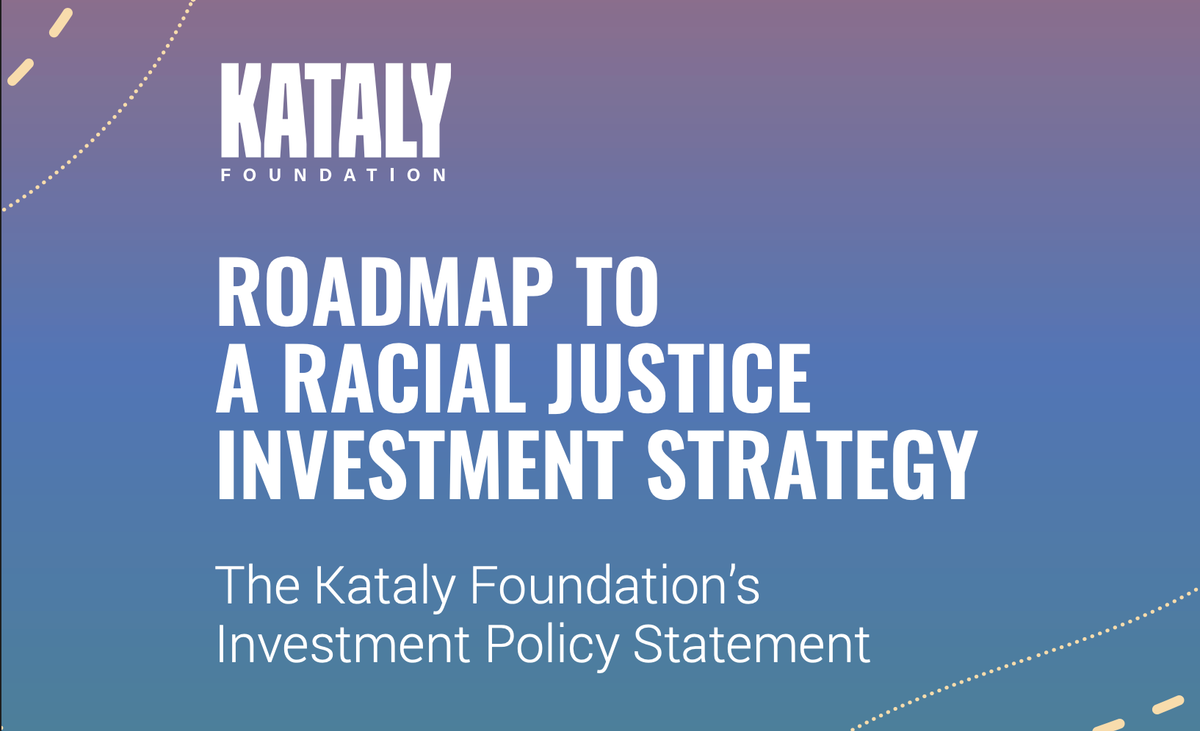
The investment policy statement (known commonly as an “IPS”) is typically the driest, and most important, governance document in a foundation's toolkit.
It's also the place where many families, foundations, and endowments limit their values-alignment.
An IPS is simple in theory. It establishes, defines, constrains, and informs how a foundation, endowment, or similar entity invests its assets. And in doing so, it shapes the goals a foundation's capital stewards — whether internal or external — work towards on its behalf.
Which is precisely why The Kataly Foundation's new investment policy statement is a work of art. Titled, Roadmap to a Racial Justice Investment Strategy, the IPS tells the story of Kataly's journey towards what it calls non-extractive returns, and to applying CEO Nwamaka Agbo's Restorative Economics Framework across its portfolios, while preserving capital.
“The Kataly Foundation moves resources to support the economic, political, and cultural power of Black and Indigenous communities, and all communities of color. By transforming our relationship to capital, the planet, each other, and ourselves, we will redistribute and redefine wealth in a way that leads to transformation, abundance, and regeneration.”
Visually stunning, expertly defined, and collectively-minded, Kataly's new investment policy serves as a reminder of what's possible when Foundations invest in disruptive ideas and the leaders who hold them. You can read the full IPS here.
⚡️ Key stat: For the first three years, including during the pandemic, Kataly realized a 22% return on its investments despite being invested in an ESG-screened portfolio.